Varvakios Central Market: What A Market Tour Shows You
Varvakios Agora trades Monday to Saturday under an 1886 glass-and-metal roof. Here is what a guided market visit shows you and which Athens walks and classes actually go inside.
Short answer
Varvakios Central Market on Athinas Street trades Monday to Saturday, is closed Sundays and on Greek public holidays, and is best visited Tuesday to Friday before noon. Several Athens food walks and one cooking class name a market visit in their inclusions, with from-prices between €69 and €89 per person.
Athens's covered market sits one street inland from Monastiraki, and a guided visit is the calmest way into it. The walks and classes that name a market visit sit within the guided food walks of Athens, alongside walks that never enter the halls at all. Here you will find what Varvakios Agora contains, when to go, and which products actually take you inside.
| Fact | Detail |
|---|---|
| Location | Athinas Street, between Monastiraki and Omonia |
| Opened | 1886, with a glass-and-metal roof designed by Ioannis Koumelis |
| Trading days | Monday to Saturday; closed Sundays and on Greek public holidays |
| Best time | Tuesday to Friday, 8 am to noon; Saturday busier; January and August quieter |
| Inside | Meat hall and a central fish market under one roof |
| Separate hall | Fruit and vegetable market across Athinas on Aristogeitonos and Armodiou |
| Holiday closures | Clean Monday, Orthodox Easter and Easter Monday; open the Sunday before Clean Monday with overnight trading |
What Is Varvakios Central Market?
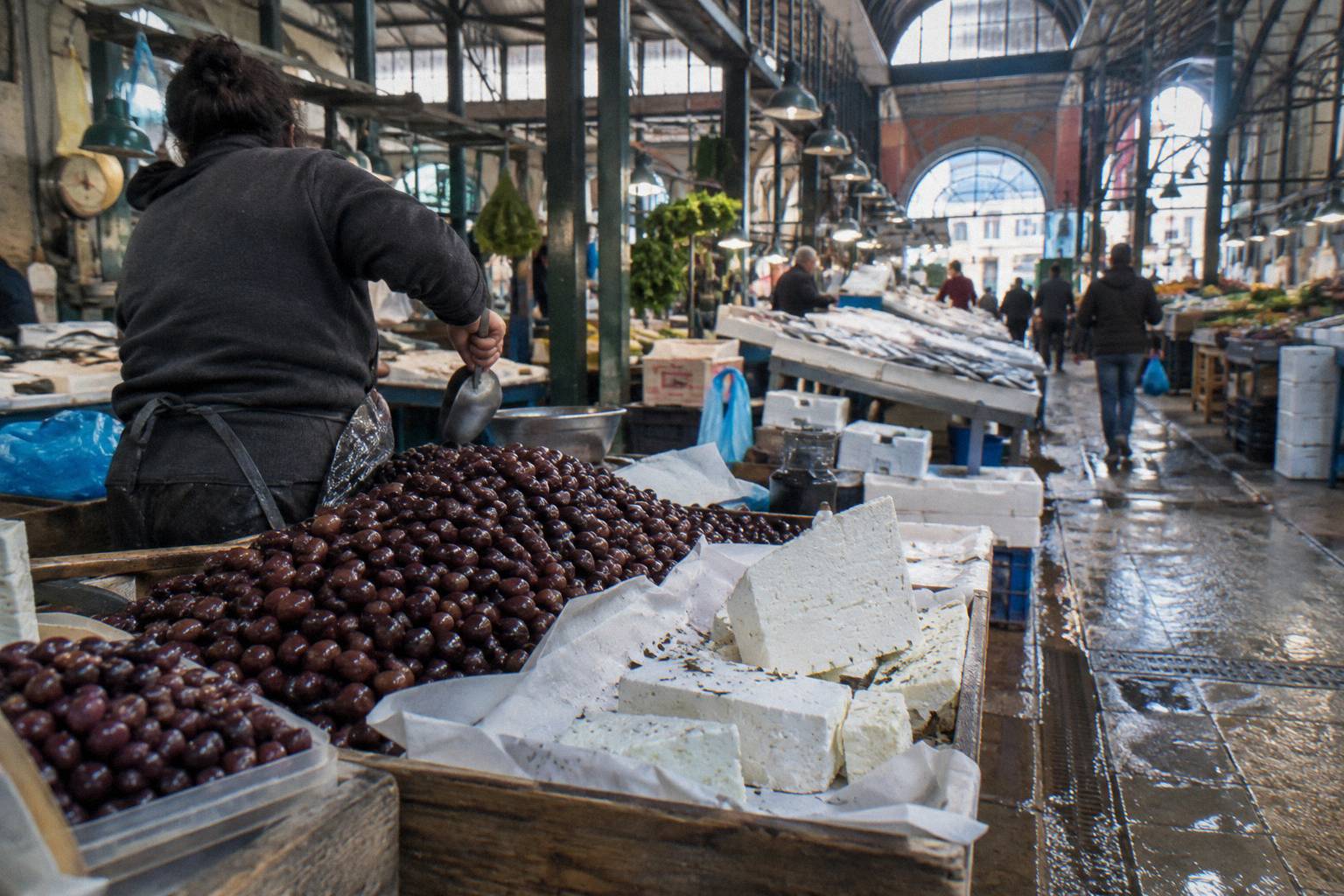
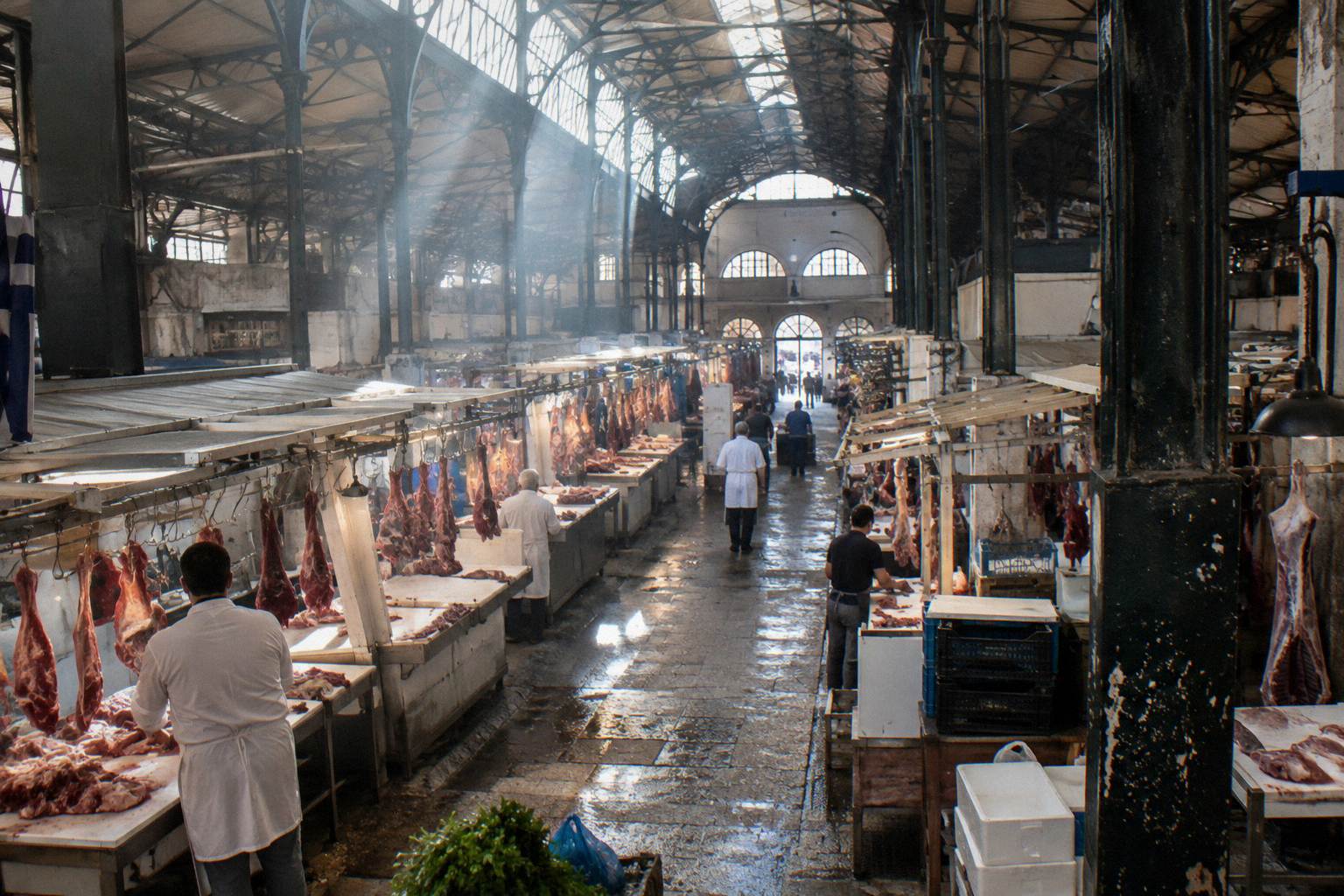
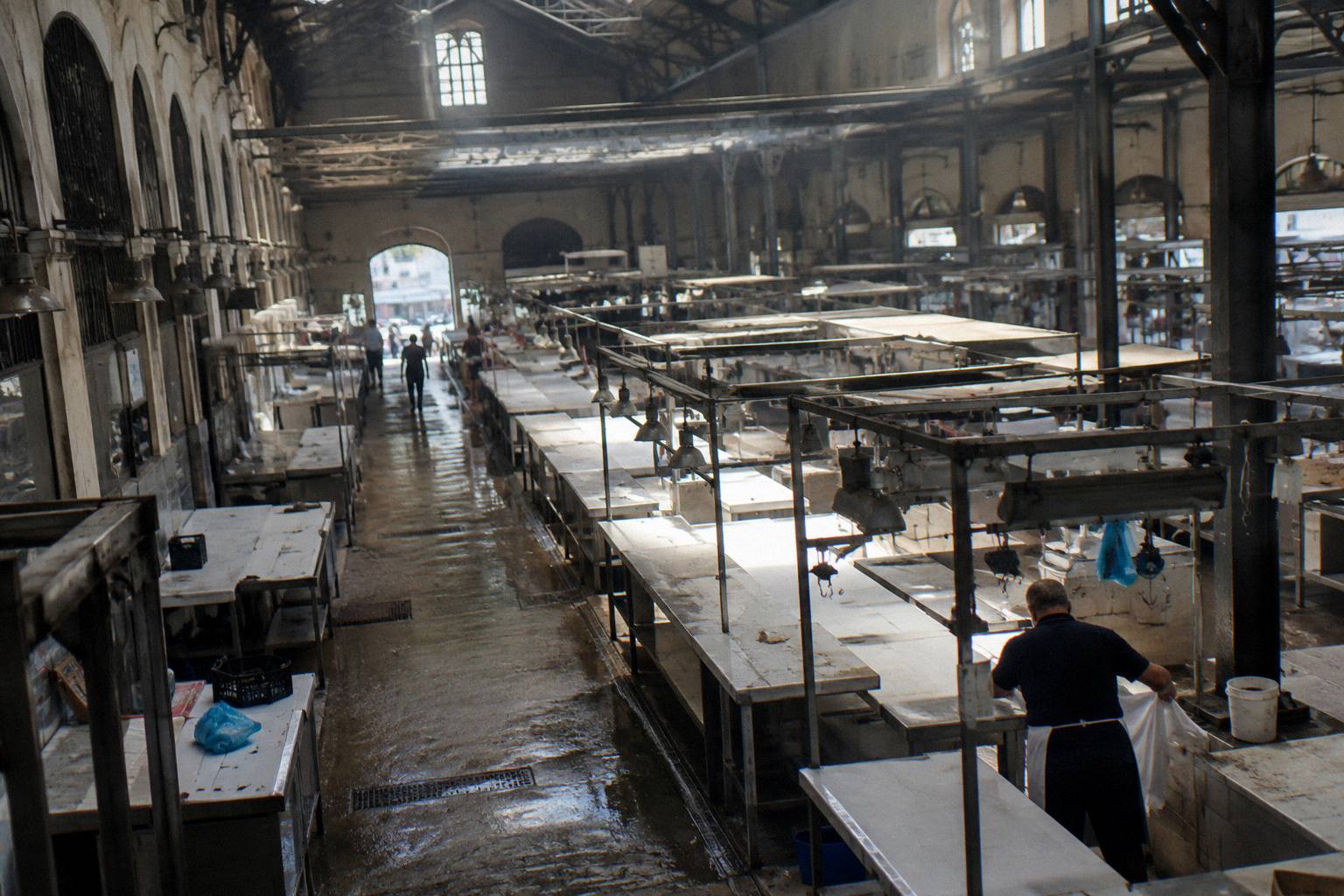
Varvakios Central Market is Athens's covered public market on Athinas Street, opened in 1886 with a glass-and-metal roof designed by Ioannis Koumelis. Inside are a meat hall and a central fish market; the fruit and vegetable market sits in a separate hall across the street on Aristogeitonos and Armodiou. It trades Monday to Saturday and closes on Sundays. The building takes its name from Ioannis Varvakis, and its full Greek name, Varvakios Agora, appears on most signage.
The Athens tourism guide to the Central Market describes the layout that still defines a visit today. The meat hall runs along one side with row after row of butchers' counters, while the central fish market fills the space between, with ice beds of Mediterranean catch displayed through the morning. Traders set up well before dawn; the second Athens tourism guide to Varvakios Agora notes that real trading starts around 06:00 and that stalls wind down through the early afternoon.
A guided walk changes what you take from the hall. On your own, the market reads as a wall of counters; with a food leader, the individual stalls become producers with specialities, and the fish on ice become the species that turn up on taverna plates across the city. Several of the walks compared here name a visit to the fish and meat market among their inclusions, and one cooking class builds its shopping trip around the stalls before a hands-on session.
Timing matters more here than at almost any other stop on an Athens food itinerary. Individual stalls keep their own times, and no official page publishes exact hours, so the workable rule is days, not minutes: Monday to Saturday, before noon, and never on a Sunday or Greek public holiday. The 1886 building has outlasted every change in how the city shops, and it still functions as the supply point for tavernas and household cooks rather than as a museum piece, which is exactly why a morning visit rewards the effort.
Which Athens Walks Actually Visit The Central Market?
Six of the products compared here name a market visit in their own inclusions: four guided food walks, one semi-private morning walk and one cooking class with market shopping. From-prices run from €47 to €89 per person and durations from 3 hours 30 minutes to 4 hours, so the choice comes down to group size, tasting count and whether you want to cook afterwards. No other tour promises a market stop, and a walk that does not name the visit should not be booked on the assumption of one.
The most direct option is the Athens, Greek food tour including market visit from Athens Walking Tours, known here as Market Visit, Small Group. It departs from the Syntagma Square fountain, runs 3 hours 30 minutes, caps the group at 16 and costs from €69 per person. Its inclusions name exclusive tastings of premium Greek products such as olive oil, honey and cheeses, a dedicated local food specialist, visits to carefully selected local establishments and a souvlaki finish in pork, chicken or vegetarian. It holds a rating of 4.9 from 638 reviews, and free cancellation applies up to 24 hours before start. The full Market Visit, Small Group tour page has the meeting details and dates.
Two other walks fold the market into longer tasting routes. The Greek Food Walking Tour in Athens from Athens Walks Tour Company, or Monastiraki Walk, Market Visit, departs Monastiraki Square, runs 3 hours 30 minutes, caps groups at 12 and costs from €72 per person; its inclusions name a visit to the fish and meat market plus 12 tastings across 6 food stops, with a 5 rating from 5,884 reviews behind it. The 4-Hour Tasting, 18+ Foods walk from Athens Food on Foot departs the Acropolis metro station, costs from €78 per person and names a Central Market visit in its inclusions, except on Sundays when the market is closed.
The remaining three split between small groups and the stove. Semi-Private Morning, 15+ Tastings from Greeking.me explores Athens Central Market with a group capped at 10, costs from €89 per person and runs 4 hours, with a 4.9 rating from 563 reviews. Classic Walk, Local Drink from Athenian Tours names a market visit alongside one traditional local beverage, costs from €47 per person and runs 3 to 4 hours. The Athens: Cooking Class with Shopping in Central Market & Lunch from Active Athens Holidays, short name Market Shopping, Lunch Included, turns the market into your larder: you shop, then cook a main dish, two appetisers, a salad and dessert with a glass of wine, from €79 per person over 3 hours 30 minutes, capped at 12, minimum age 6.
| Product | Departure area | From price | Duration | Group cap |
|---|---|---|---|---|
| Classic Walk, Local Drink | Mitropoleos Street | €47 per person | 3 to 4 hours | Group size on the booking page |
| Market Visit, Small Group | Syntagma Square | €69 per person | 3 hours 30 minutes | 16 |
| Monastiraki Walk, Market Visit | Monastiraki Square | €72 per person | 3 hours 30 minutes | 12 |
| 4-Hour Tasting, 18+ Foods | Acropolis metro station | €78 per person | 4 hours | 12 |
| Market Shopping, Lunch Included | Near Acropolis metro | €79 per person | 3 hours 30 minutes | 12 |
| Semi-Private Morning, 15+ Tastings | Syntagma Square | €89 per person | 4 hours | 10 |
One practical note covers all six: the market closes on Greek public holidays, including Clean Monday, Orthodox Easter and Easter Monday, so a walk that names the visit may reroute on those days. Ask the operator before booking a date that collides with a holiday, and check the booking calendar for Sunday departures, when the market halls stay shut.
When Should You Go To The Market?
Go Tuesday to Friday, 8 am to noon, when the halls are fully stocked and the Saturday crowds have not arrived. The market trades Monday to Saturday and is closed on Sundays and Greek public holidays, including Clean Monday and Orthodox Easter. January and August are quieter months overall, and real trading starts around 06:00, with stalls winding down through the early afternoon. An afternoon arrival finds tired counters; a pre-noon arrival finds the market working.
The trading-day pattern shapes every bookable walk too. The 4-Hour Tasting, 18+ Foods line states its market visit runs except on Sundays, which is the clearest written admission that the calendar governs the itinerary. The same logic applies to any date falling on Clean Monday or the Easter holidays, when the halls are shut altogether; one exception exists, since the market opens on the Sunday before Clean Monday and trades through the night.
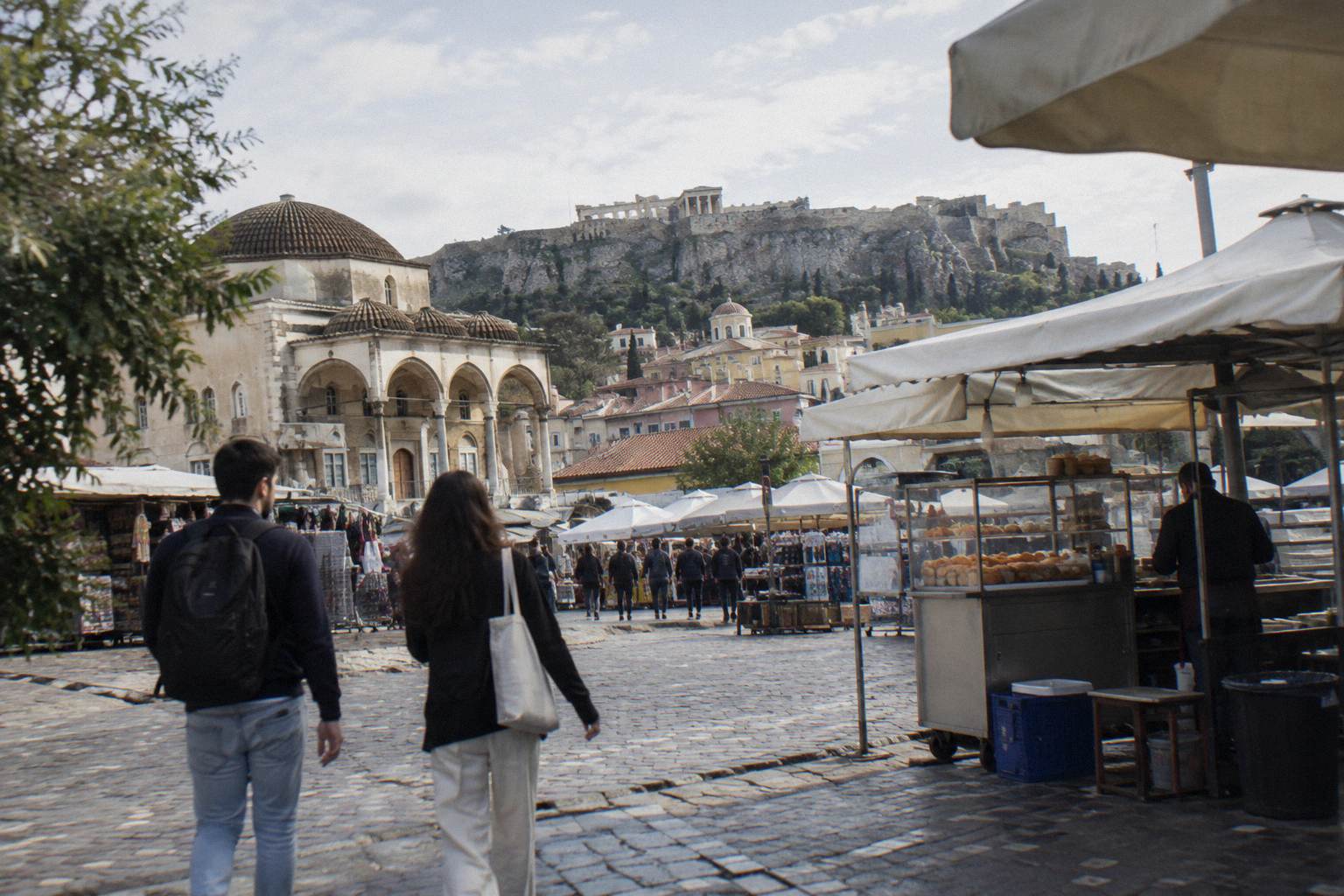
There is a neighbourhood consideration as well. Both Athens tourism guides to the market note that the streets west toward Omonia, specifically Sofokleous and Sokratous, are best avoided after dark, while the Athinas and Monastiraki side is fine. Every market walk compared here departs from the safe side of that line, from Syntagma, Monastiraki or the Acropolis metro station, and a guided group moving before noon has no reason to drift west.
Seasonality is gentler here than at outdoor attractions. The market is indoors under its glass roof, so August heat, with a mean daily high of 34.3 °C in the Athens climate normals, matters less inside the halls than on the walk between stops. January, mean temperature 10.2 °C, is the quietest trading month and the easiest for standing room at the fish counters.
| Day or period | What to expect |
|---|---|
| Tuesday to Friday, 8 am to noon | Best window: full stalls, fewest crowds |
| Saturday | Busier, still trading |
| Sunday | Closed, except the Sunday before Clean Monday with overnight trading |
| Clean Monday, Orthodox Easter, Easter Monday | Closed for the holiday |
| January and August | Quieter trading months |
Cruise visitors have a straight run in. Metro Line 1 covers Piraeus to Monastiraki in 17 minutes, and the Piraeus cruise terminals sit within comfortable walking distance of the metro station, so a pre-noon market walk pairs naturally with a port call; the cruise day food walk planning guide covers the timing in full.
What Do The Halls Actually Contain?
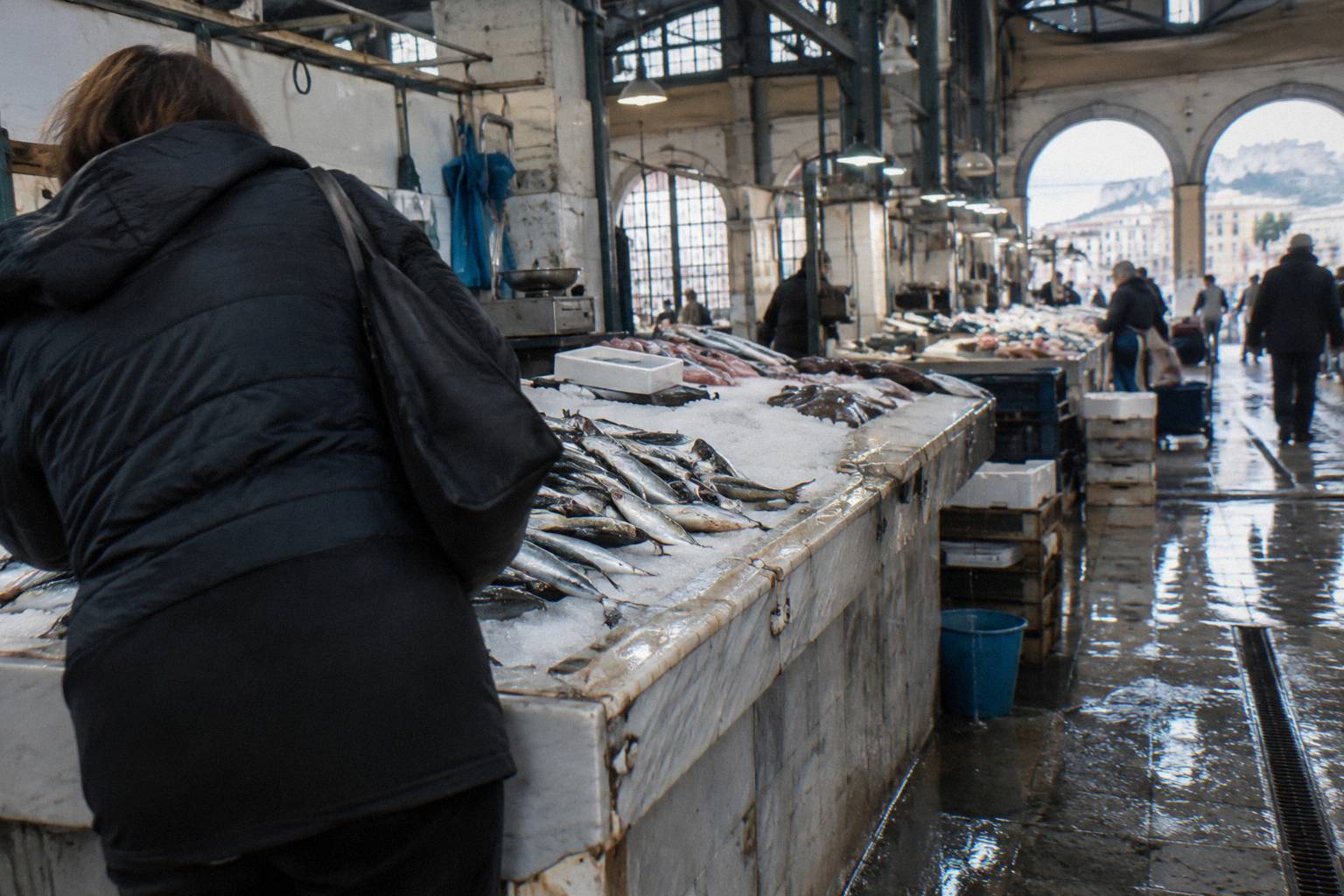
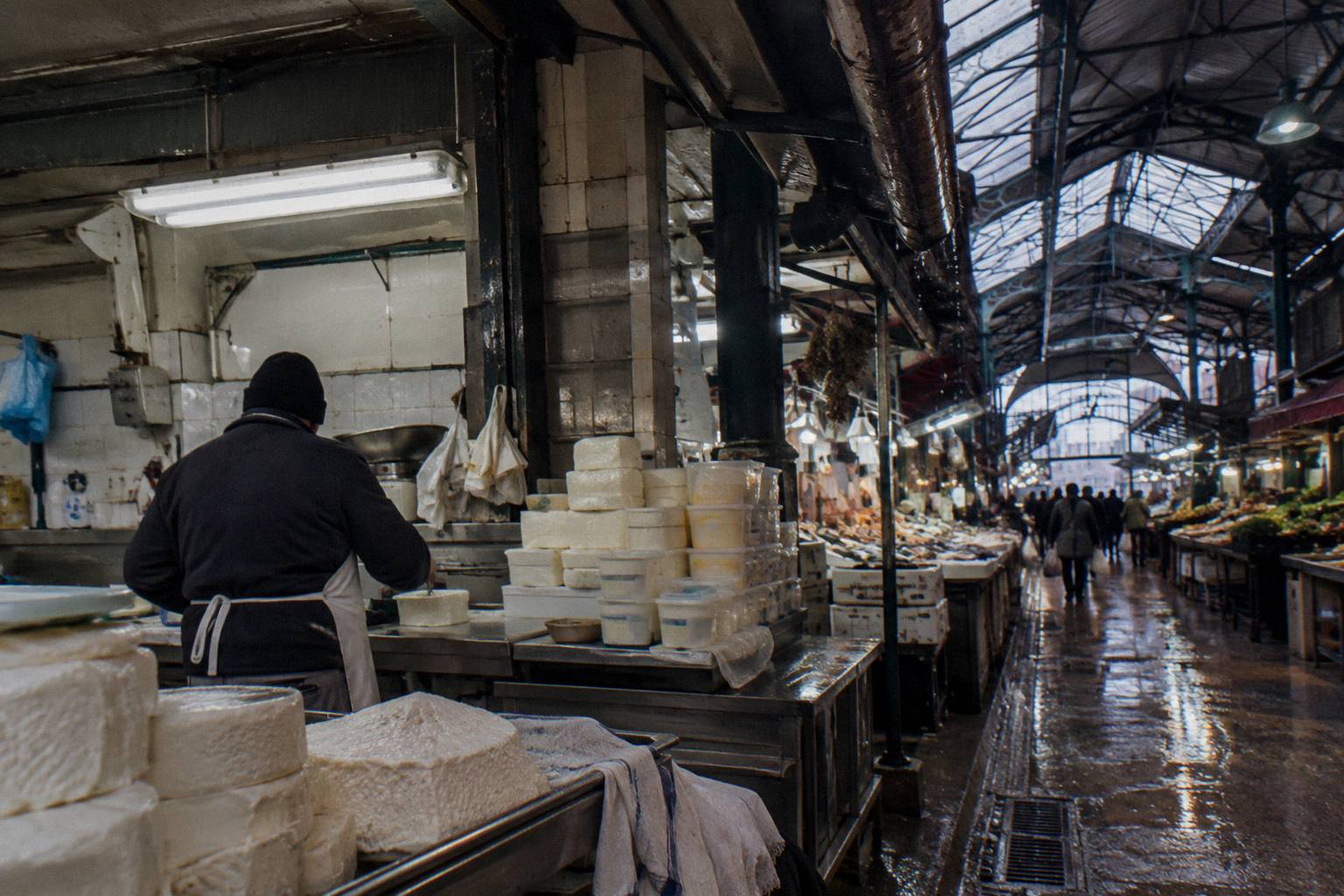
Two halls sit under the main roof: a meat hall of butchers' counters and a central fish market laid out on ice. The fruit and vegetable market is a separate hall across Athinas on Aristogeitonos and Armodiou, and it is not part of the covered building. Individual stalls keep their own opening and closing times, and the display changes with the day's catch and the season. What a guided visit adds is context for each counter, not access to anything a solo visitor cannot see.
The fish market is the visual centre of a visit. Mediterranean catch is displayed on ice through the morning, and a food leader can connect what lies on the slabs to what appears on mezze plates across the city; the Greek meze and taverna plates guide covers that side of the menu. The meat hall runs the length of the building, with the butchers' trade organised in dense parallel rows much as it was arranged when the building opened in 1886.
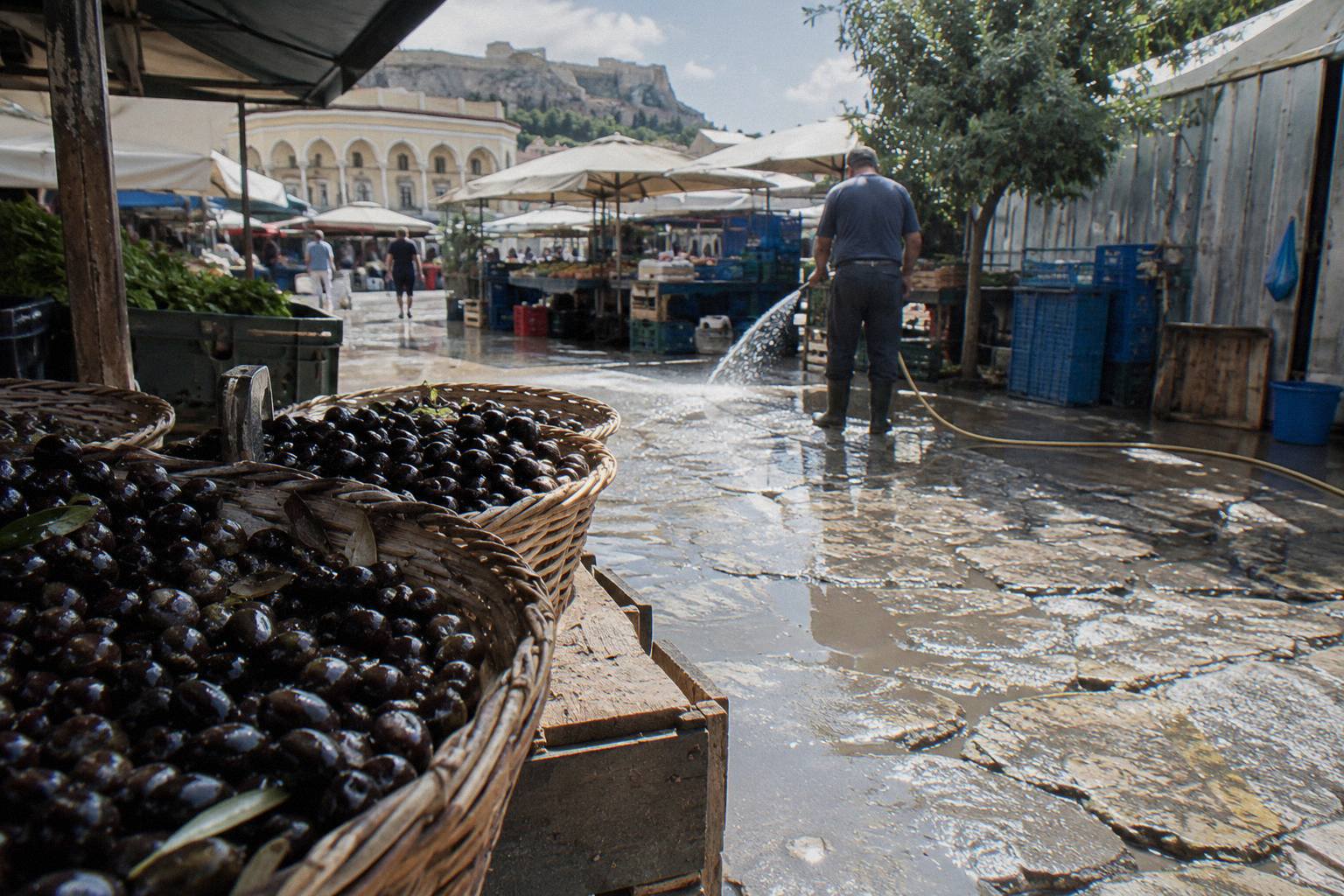
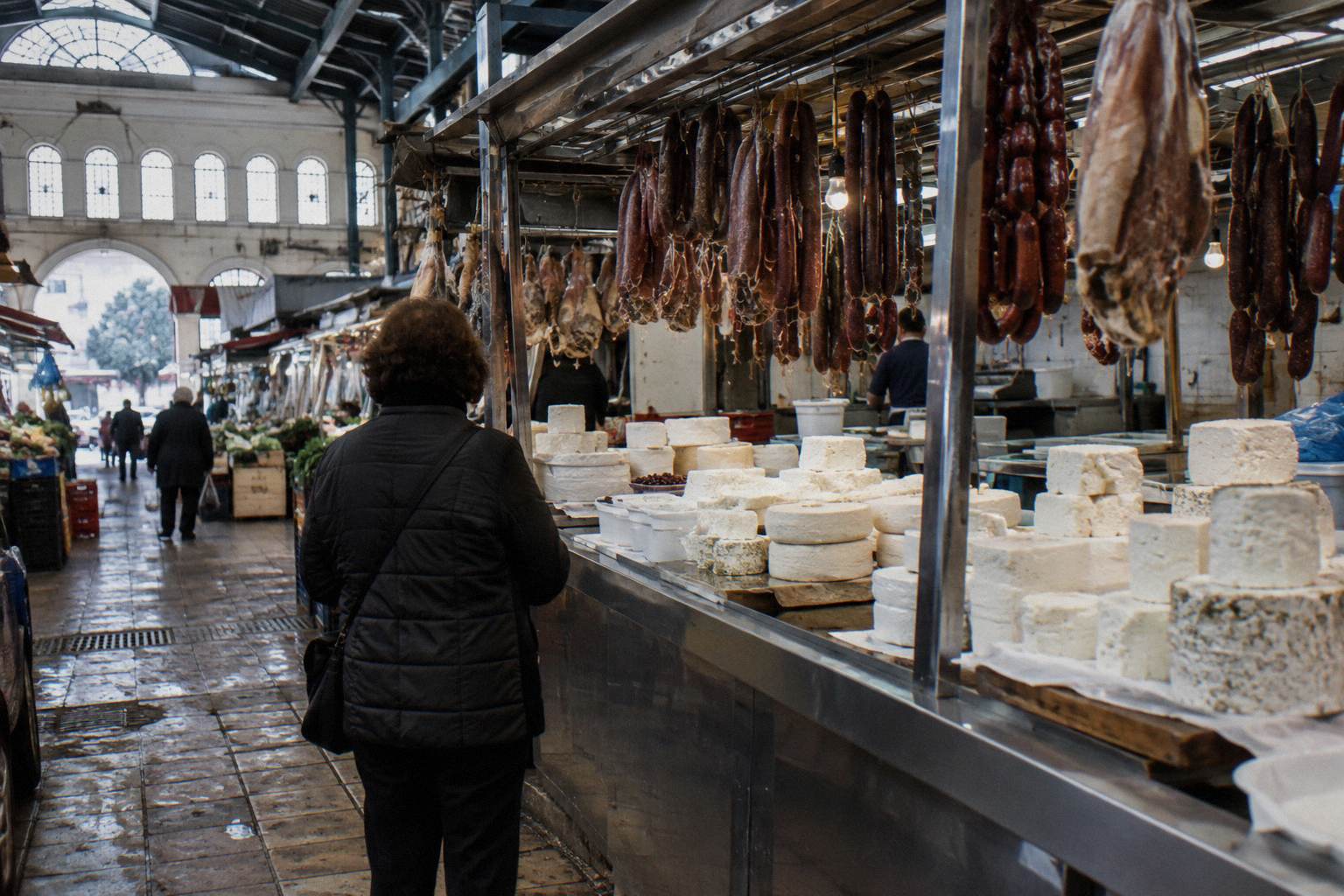
The produce hall across the street rounds out the shopping picture. Olives appear there in bulk, and Kalamata olives carry an EU Protected Designation of Origin, as the EU register entry for Kalamata olives records. Cheese counters elsewhere in the market stock feta, itself a Protected Designation of Origin registered in 2002. Both statuses matter to a market walk because a guide can point out what the labels mean when you buy the same products to take home.
No walk should be booked on the promise of a specific stall, species or dish on a given day. The vendors and the day's delivery decide the display, and a market visit is best understood as a guided reading of whatever the market holds that morning.
Market Walk Or Market Shopping Class: Which Fits?
Choose the walk if eating is the point and the class if cooking is. The walks cost from €47 to €89 per person and run 3 to 4 hours with tastings built in; the shopping class costs from €79 per person, runs 3 hours 30 minutes and ends with a meal you cooked yourself. Walking versions suit a first visit to Athens; the class suits anyone who wants the recipes to travel home. Both formats put you inside the halls before noon.
The cooking option deserves its own description. Market Shopping, Lunch Included from Active Athens Holidays departs from Tziraion 12 near the Acropolis metro station, caps at 12 participants with a minimum age of 6, and includes market shopping, all equipment, a souvenir recipe book per booking and a meal of a main dish, two appetisers, a salad and dessert with a glass of wine. It holds a 4.9 rating from 62 reviews. The Athens cooking classes compared guide sets it against the rooftop and garden classes that skip the market altogether.
For walkers, the format choice is group size against tasting count. Market Visit, Small Group caps at 16 with a souvlaki finish; Semi-Private Morning, 15+ Tastings caps at 10 and describes its 15+ tastings as more than enough for lunch, with vegetarian substitutions available on request; Monastiraki Walk, Market Visit caps at 12 across 12 tastings at 6 stops. The choosing a tasting tour group size guide walks through the trade-offs.
Price sits lower on the decision than the calendar. All amounts are in euros per person, vary by date and group, and the booking page shows the price for your date. A family weighing formats should also read can kids join a food walk in Athens, since minimum ages differ sharply between products.
How Much Does A Market Visit Cost Through A Tour?
Market-visit walks start from €47 per person and reach €89 at the semi-private end, with the shopping class at from €79 per person. Every one of these prices is per person, in euros, varies by date and group, and the booking page shows the price for your date. Free cancellation up to 24 hours before start applies to all six products. Cheaper walks exist on the site, but none of them name a market visit.
| Product | From price | Duration | Rating | Cancellation |
|---|---|---|---|---|
| Classic Walk, Local Drink | €47 per person | 3 to 4 hours | 5.0 from 98 reviews | Free up to 24 hours before start |
| Market Visit, Small Group | €69 per person | 3 hours 30 minutes | 4.9 from 638 reviews | Free up to 24 hours before start |
| Monastiraki Walk, Market Visit | €72 per person | 3 hours 30 minutes | 5.0 from 5,884 reviews | Free up to 24 hours before start |
| 4-Hour Tasting, 18+ Foods | €78 per person | 4 hours | 4.9 from 541 reviews | Free up to 24 hours before start |
| Market Shopping, Lunch Included | €79 per person | 3 hours 30 minutes | 4.9 from 62 reviews | Free up to 24 hours before start |
| Semi-Private Morning, 15+ Tastings | €89 per person | 4 hours | 4.9 from 563 reviews | Free up to 24 hours before start |
The cheapest line on the table buys the shortest promise. Classic Walk, Local Drink includes one traditional local beverage, digital recipes sent after the tour and a selection of sweet and savoury specialities; it is the lightest option of the six. The mid-band walks buy a full meal's worth of tastings, and the top row buys a group of 10.
Tipping sits outside the ticket price everywhere. Tipping is not mandatory in Greece, with 5 to 10 percent appreciated in restaurants for good service, as the visitgreece.gr did-you-know page puts it; the tipping on tasting walks guide covers guide gratuities, which several of these products name as excluded. The food walk prices planning guide places these figures against the whole Athens market. See dates for your travel window before comparing, since a from-price is the floor, not the quote.
What Else Sits Around The Market?
The market anchors Athinas Street, running from Monastiraki Square up toward Omonia. On the Monastiraki side sit the Plaka and Psyrri neighbourhoods that most food walks thread through; streets west toward Omonia, Sofokleous and Sokratous, are best avoided after dark. Metro Line 1 covers Piraeus to Monastiraki in 17 minutes for anyone coming from the port. Almost every walk compared here starts within a few minutes of the market's front doors.
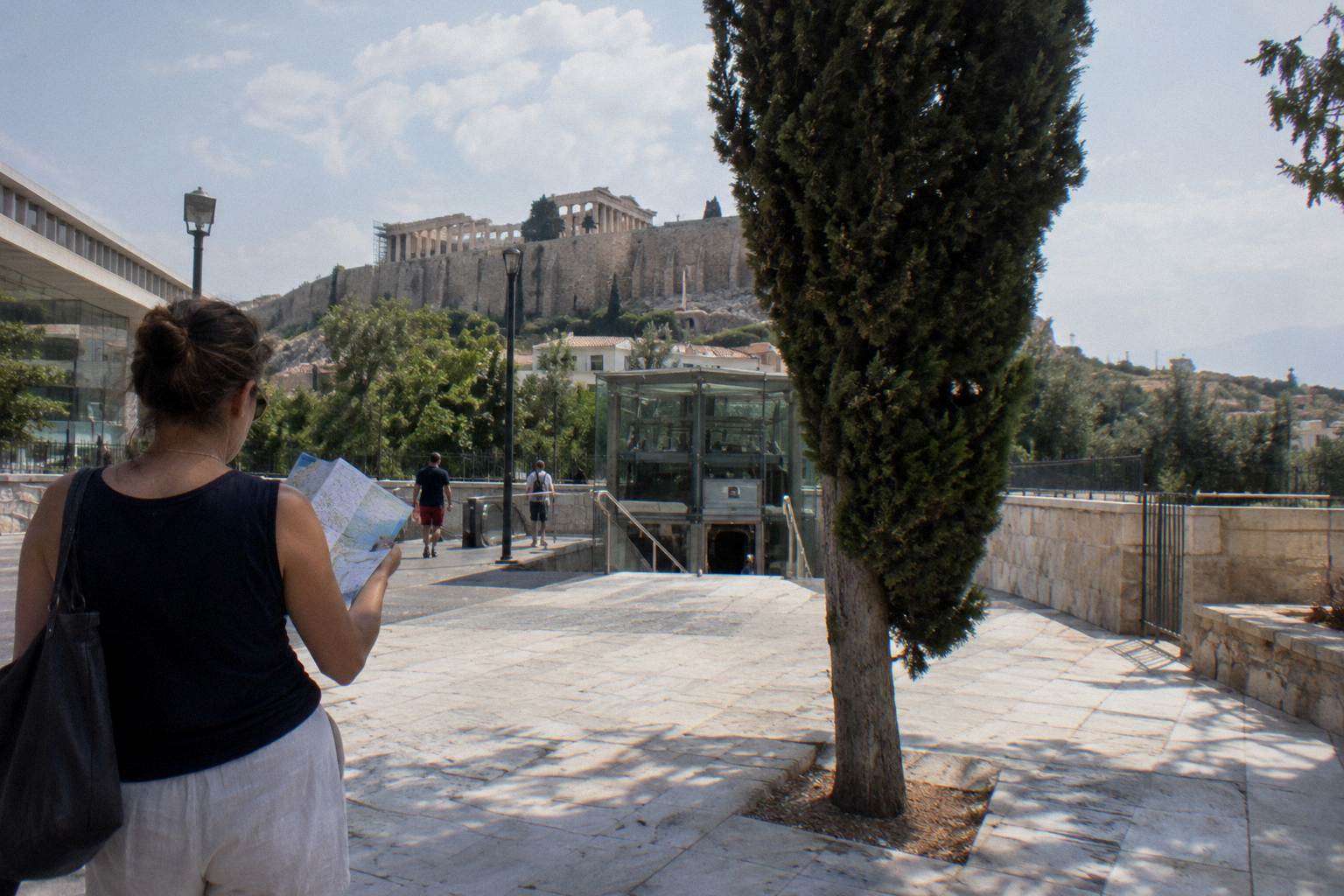
Three departure points recur across the tours compared. Syntagma Square, at the top of Ermou, sends walks down toward the market through the commercial centre. Monastiraki Square sits at the market's southern shoulder. The Acropolis metro station adds a climb to the route but pairs the market with the Koukaki side of the city; the Monastiraki and Psyrri food stops guide maps the streets between the two.
Athens tap water meets EU standards, per the EYDAP Athens water supply page, which matters on a pre-noon walk in August; the Athens Street Food Walk even suggests bringing a refillable bottle. Meal times matter too: lunch starts around 14:00 and dinner after 21:00 in Greece, so a morning market walk ends before the city sits down to eat, leaving the afternoon free.
A market visit also sets up the rest of an eating day. Koulouri, the sesame rolled bread ring described on the visitgreece.gr page on Greek snacks, is sold around Monastiraki for the walk down; loukoumades, fried dough with honey per the visitgreece.gr page on Greek sweets, close it out. The what to eat in Athens dishes guide sequences both. For walks that start beyond the market, compare the routes on the homepage.
What Trips People Up Before You Book
Three mistakes recur: booking a Sunday or holiday date when the halls are shut, assuming a walk visits the market when its inclusions never name it, and arriving in the afternoon when the stalls have wound down. Each is avoidable by checking the calendar, reading the inclusion line and choosing a morning departure. The fixes take a minute each and change the whole day.
Booking a walk for a Sunday is the classic error. The market trades Monday to Saturday only, and the 4-Hour Tasting, 18+ Foods line is explicit that its market visit runs except on Sundays. The same trap opens on Clean Monday, Orthodox Easter and Easter Monday, when the market closes for the holiday; ask the operator how a holiday departure is handled before paying.
Assuming a market stop on a walk that never promises one is the second. Only the six products named above include a market visit in their inclusions. A hidden-gems walk or a Plaka route may pass the street without entering, and no operator will add a stop on request; pick the product whose line names the visit, or accept a route that stays outside.
The third mistake is timing the day around dinner rather than the market. Stalls wind down through the early afternoon, and Greeks eat late, with dinner after 21:00, so visitors who follow the local clock arrive at the market exactly when it empties. Flip the pattern: market before noon, big lunch, evening free. The when do Greeks eat dinner post explains the rhythm.
One closing prompt: whichever of the six you favour, check availability for your date before planning the rest of the day around it, since morning departures fill first.
Common Questions About The Central Market
Is Varvakios Central Market Open On Sundays?
No. The market trades Monday to Saturday and is closed on Sundays, with one exception: it opens on the Sunday before Clean Monday and trades through the night. It also closes on Greek public holidays, including Clean Monday, Orthodox Easter and Easter Monday.
What Time Should I Visit The Central Market?
Tuesday to Friday, 8 am to noon, is the best window. Saturday is busier and January and August are quieter months. Real trading starts around 06:00 and stalls wind down through the early afternoon, so mornings see the market at work.
Do Athens Food Tours Go Inside The Market?
Several name a market visit in their inclusions: Market Visit, Small Group from €69 per person, Monastiraki Walk, Market Visit from €72, 4-Hour Tasting, 18+ Foods from €78, Semi-Private Morning, 15+ Tastings from €89 and Classic Walk, Local Drink from €47, all per person. Walks that do not name the visit should not be booked for one.
Is There A Cooking Class That Shops In The Central Market?
Yes. Athens: Cooking Class with Shopping in Central Market & Lunch from Active Athens Holidays includes market shopping followed by a hands-on session and lunch, from €79 per person over 3 hours 30 minutes, for groups of up to 12 with a minimum age of 6.
What Is Inside Varvakios Agora?
A meat hall and a central fish market sit under the 1886 glass-and-metal roof designed by Ioannis Koumelis. The fruit and vegetable market is a separate hall across Athinas Street on Aristogeitonos and Armodiou.
Is The Area Around The Market Safe To Walk?
The Athinas and Monastiraki side is fine, and every market walk compared here departs from that side. The Athens tourism guides advise avoiding the streets west toward Omonia, Sofokleous and Sokratous, after dark.