Souvlaki Vs Gyros In Athens: The Difference And What To Order
Souvlaki and gyro look similar in a wrapped pita, but the cooking method sets them apart. Here is how each is made, how each is served, and how to taste both on a guided street food walk.
Short answer
Souvlaki is skewered meat cooked on an open grill, also served de-skewered with pita and tzatziki; gyro is meat roasted on a vertical spit, commonly in rolled pita with tzatziki and fries. A 3-hour street food walk from €59 per person covers souvlaki, pies and koulouri with a local guide.
The difference between souvlaki and gyro is the single most common question at any Athens food counter, and the city's street food tours exist largely to answer it with a fork rather than a dictionary. Both are pita-wrapped street classics. They are cooked completely differently, and once you have seen the skewer and the spit side by side, the confusion disappears for good.
| Fact | Detail |
|---|---|
| Souvlaki cooking method | Skewered meat cooked on an open grill |
| Souvlaki serving | Also served de-skewered with pita and tzatziki |
| Gyro cooking method | Meat roasted on a vertical spit |
| Gyro serving | Commonly in rolled pita with tzatziki and fries |
| Related walk price | Athens Street Food Walk from €59 per person, 3 hours |
| Alternative walk | Make Your Own Souvlaki from €84 per person, 3 hours 30 minutes |
| Related walk rating | 4.9 from 672 reviews |
What Is The Difference Between Souvlaki And Gyro?
The difference is the cooking method and the cut. Souvlaki is skewered meat cooked on an open grill, and visitgreece.gr describes it as also served de-skewered with pita and tzatziki. Gyro is meat roasted on a vertical spit, commonly in rolled pita with tzatziki and fries. Once wrapped, they can look almost identical, which is why so many visitors mix them up at the counter.
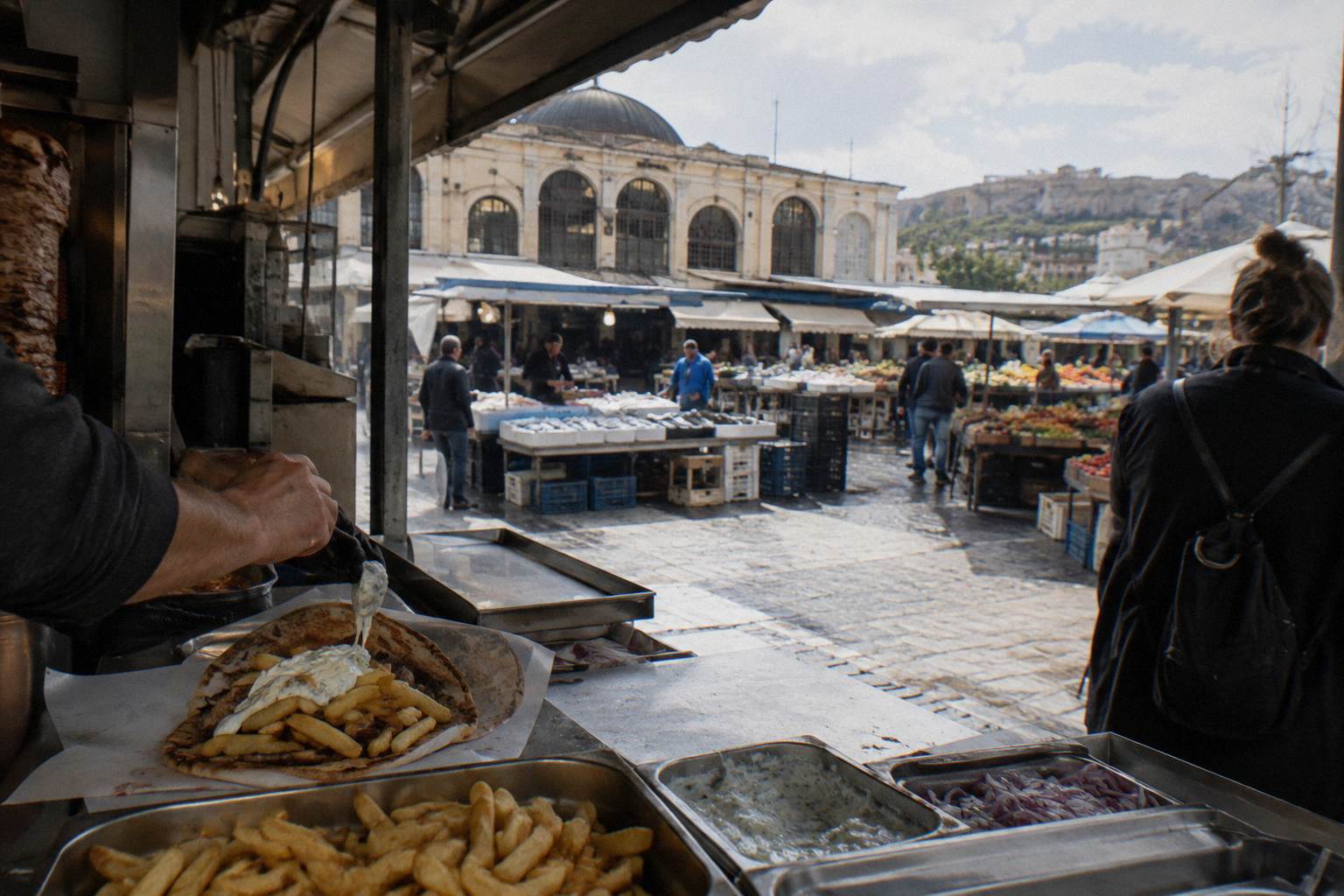
The Greek tourism board's introduction to Greek cuisine is the cleanest official statement of the split. Souvlaki starts as cubes of meat threaded on a skewer and grilled over flame. Gyro starts as layers of meat stacked on a vertical rotisserie, roasted slowly and shaved off in thin slices as it turns. The skewer versus the spit is the whole story, and it is a story you can watch happen in front of you at counters across the city centre.
Everything after the cooking is a serving decision, not a definition. Both can arrive wrapped in pita. Both are commonly paired with tzatziki. The gyro version tends to add fries inside the wrap; the de-skewered souvlaki version is pita and tzatziki with the grilled meat lifted off the stick. Neither version is more authentic than the other, and no health comparison is claimed here; they are simply two different techniques that grew up alongside each other in Greek street food.
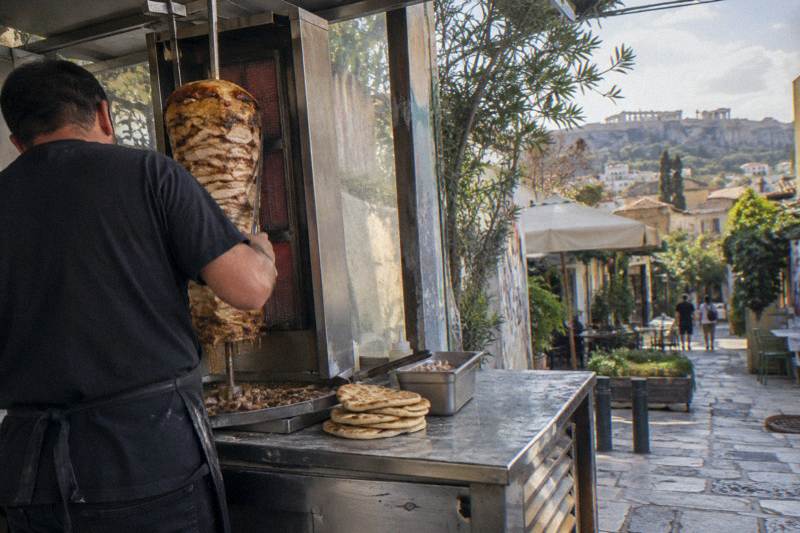
There is a useful visual test you can run yourself while waiting to order. Look at the cooking station before you look at the menu. If there is a stack of meat turning on a vertical rotisserie with a trimming knife beside it, gyro comes off that machine. If there are skewers laid across a grill grate with flame underneath, souvlaki comes off that grate. Plenty of counters run both stations side by side, which is exactly why the two names blur together for visitors, and exactly why the guided walks below spend time naming each format as it is served.
For the wider picture beyond these two dishes, the Athens street food guide covers pies, koulouri and doughnuts in the same walkable frame, and the what to eat in Athens dishes guide steps back further to mezze and taverna plates. If you would rather taste the difference than read it, the Athens Street Food Walk tour page lays out the operator's dates and group details.
How Is Souvlaki Cooked And Served?
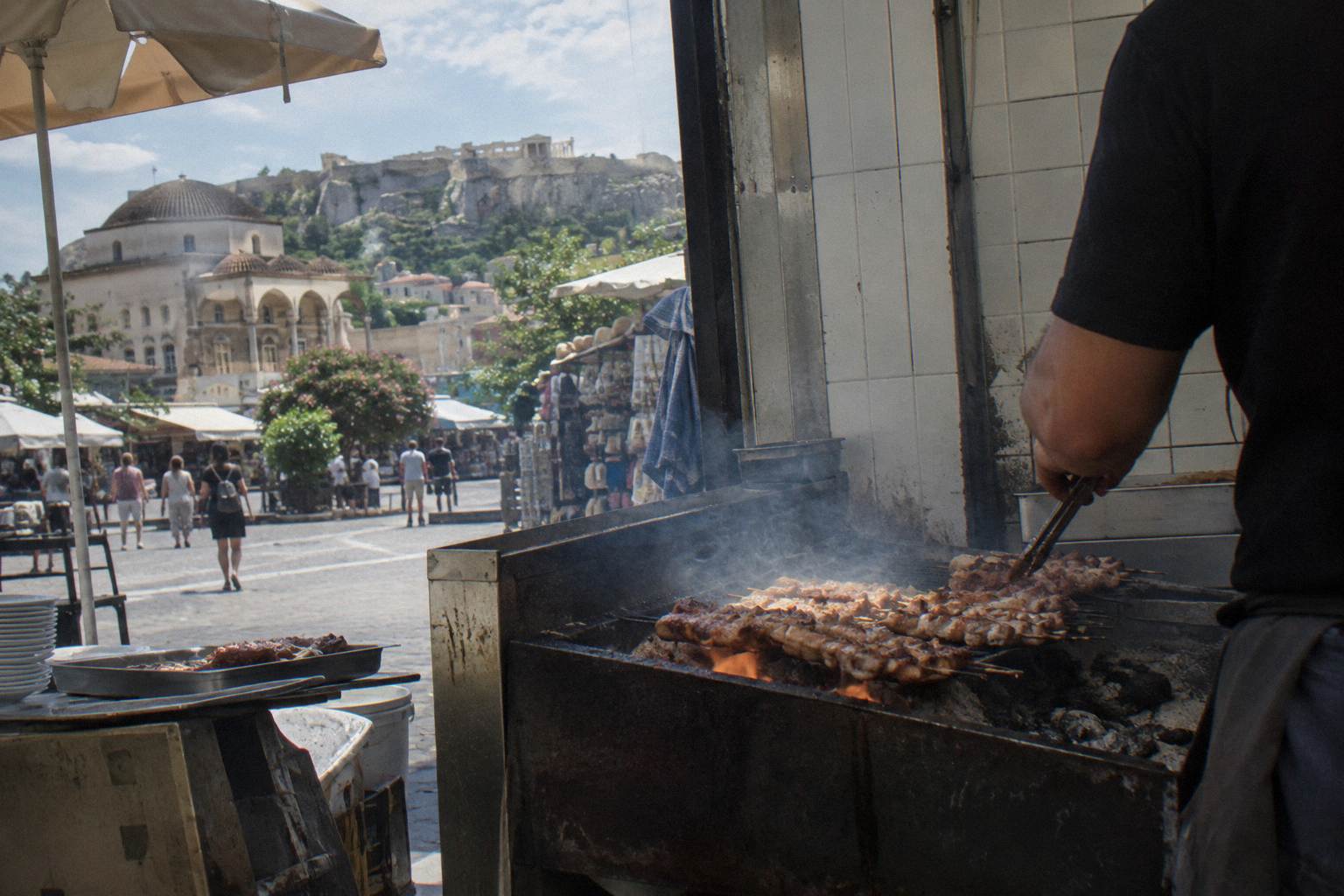
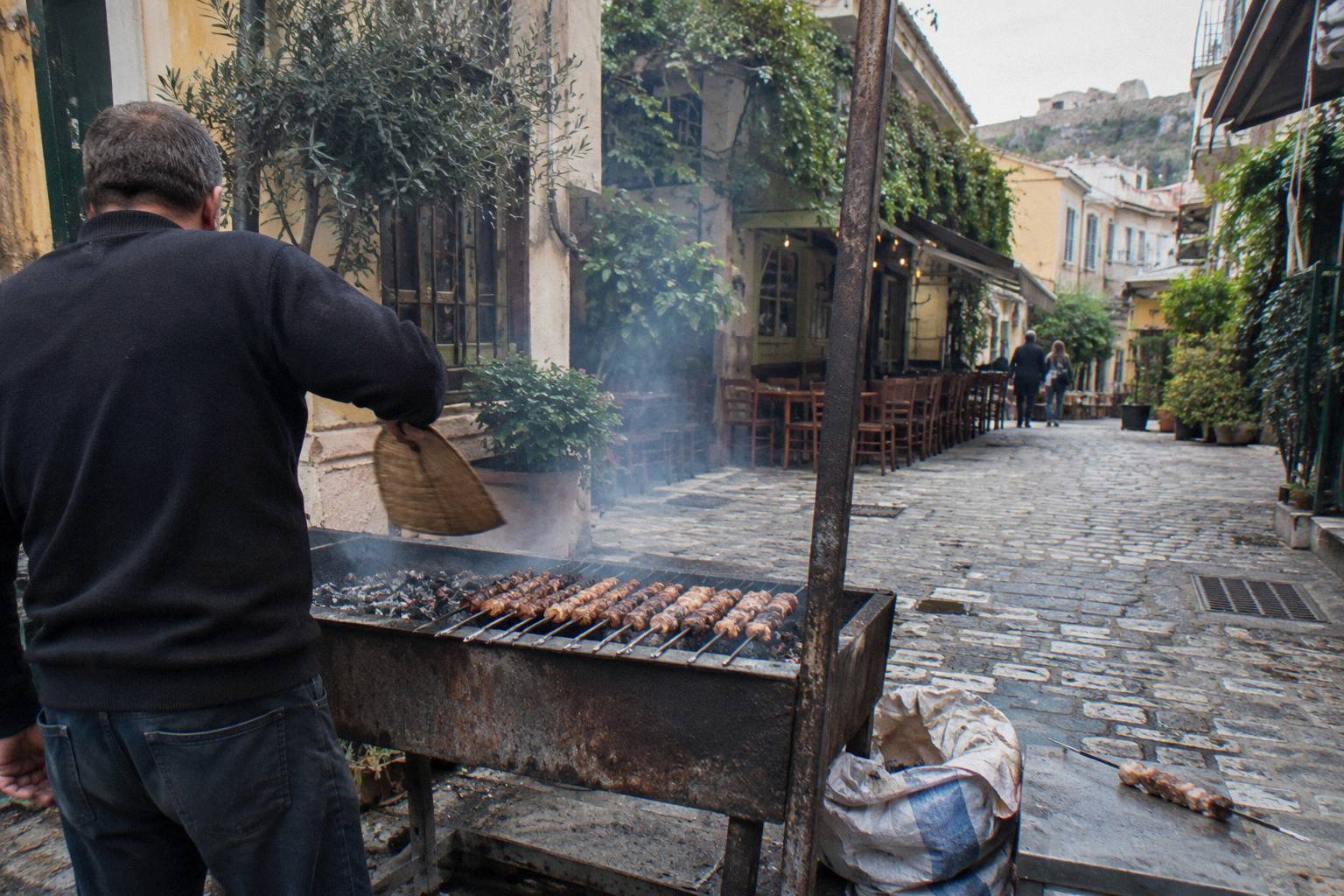
Souvlaki is skewered meat cooked on an open grill, per the visitgreece.gr cuisine page, and it is also served de-skewered with pita and tzatziki. The skewer is the defining element: cubes of meat threaded and grilled over flame, then either eaten off the stick or slid into a wrap.
The word itself refers to the skewer, and the grill marks are usually visible on the finished meat. On the street, the two serving styles are the plated skewer, sometimes with bread on the side, and the wrapped pita version where the meat comes off the skewer and lands with tzatziki inside. The de-skewered pita serving is the one most visitors meet first, and it is the one a guided walk will usually point out by name so you can see the distinction for yourself rather than taking a menu's word for it.
Pork and chicken are the common meats, and one of the walks below names a vegetarian souvlaki option among its inclusions. What is inside the wrap beyond the meat and tzatziki varies by shop and by order; that variance is normal and not a sign of anything wrong with the counter. The ordering decision is really about format: skewer on a plate when you want the grilled meat front and centre, pita wrap when you are eating on the move between sights.
If cooking it yourself appeals more than ordering it, the "Make Your Own Souvlaki" walk from Eating Europe builds a hands-on souvlaki station into a 3 hour 30 minute walk through Monastiraki and Psyrri. It runs from €84 per person, holds a 5 rating from 709 reviews, and includes 6 food tastings and 3 drink tastings along with the souvlaki making, plus a Greek coffee demonstration with a fortune-reading tradition explained. Minimum age is 4. Free cancellation applies up to 24 hours before start, and the meeting point is Pantanassa church in Monastiraki.
How Is Gyro Cooked And Served?
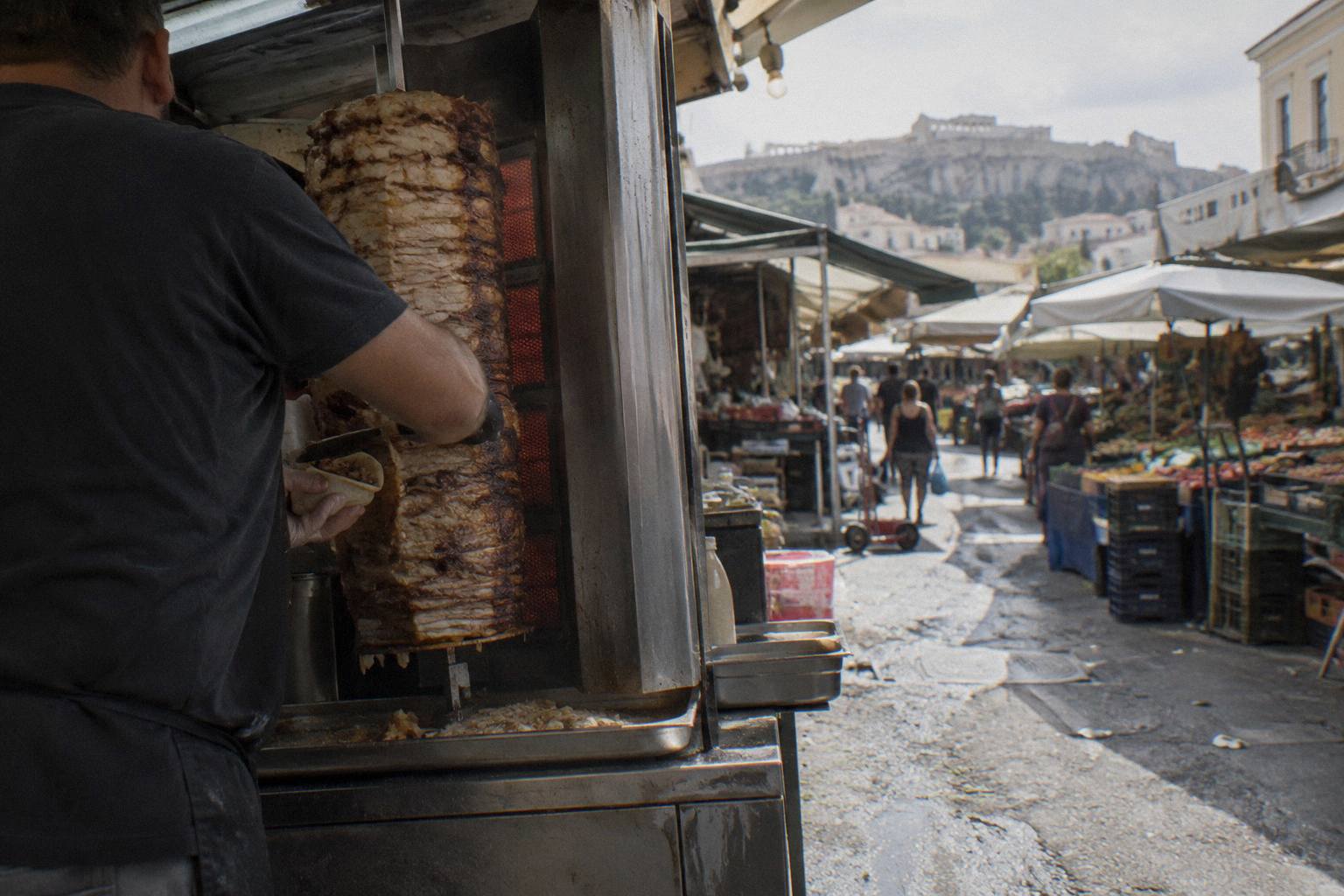
Gyro is meat roasted on a vertical spit, commonly served in rolled pita with tzatziki and fries, as the visitgreece.gr cuisine page describes it. The rotisserie stack turns slowly, the outer layer crisps, and the cook shaves off thin slices directly into the wrap. No skewer is involved at any point.
The vertical spit is the visual signature. Where souvlaki arrives as discrete grilled cubes, gyro arrives as shaved ribbons from a single stacked cone of meat, and the rolled pita format is the default rather than an option. Fries inside the wrap are the detail that most surprises first-time visitors, and tzatziki completes the standard build. For the sweets and snacks that surround the format, the visitgreece.gr page on Greek snacks places koulouri and bougatsa in the same street food family, and the visitgreece.gr page on Greek sweets covers loukoumades, the fried dough with honey that ends many a walk.
Two of the walks include souvlaki by name in their inclusions rather than gyro, which is worth knowing before you book if the spit-roasted version is your priority; ask the operator whether a gyro stop features on the day's route. The street food tours hub lists the full current set of street-format walks with prices and durations so you can compare formats directly.
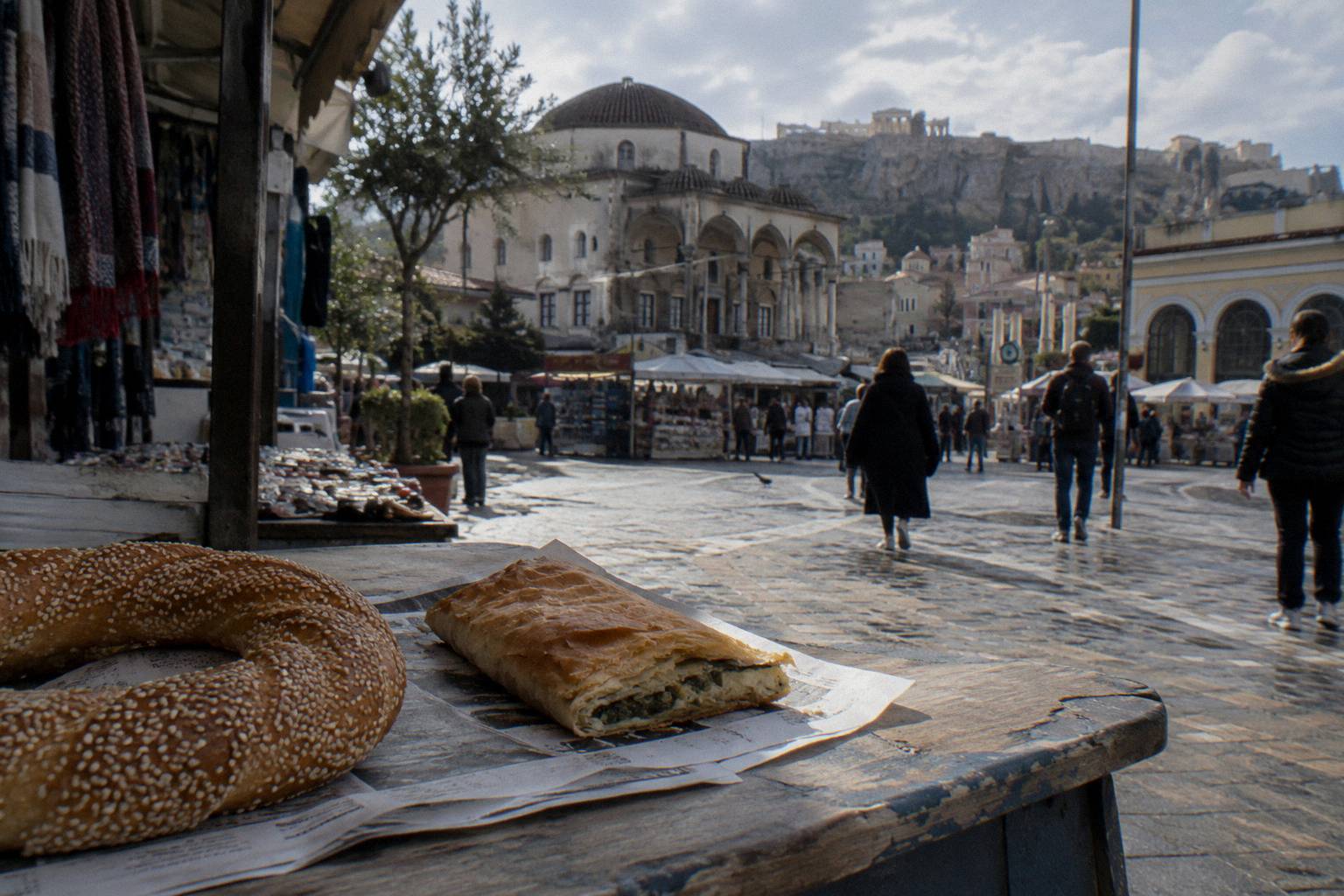
There is a scheduling angle too. Because gyro meat roasts slowly on the spit through the day, it suits the late Greek eating rhythm: visitgreece.gr notes that lunch starts around 14:00 and dinner after 21:00, with most restaurants open late. A gyro counter fits neatly into both windows, while a morning walk tends to meet souvlaki alongside breakfast-adjacent snacks like koulouri, the sesame rolled bread ring. Tipping is not mandatory in Greece, with 5 to 10 percent appreciated in restaurants for good service.
Durations run 3 hours to 3 hours 30 minutes and from-prices run €59 to €84 per person. All amounts are in euros, and prices vary by date and group; the operator's live booking calendar shows the price for your date.
The box above covers the walk at the heart of what follows: the Athens Street Food Walk by Greekality, a 3 hour circuit from Syntagma covering souvlaki, peinirli, pies, koulouri and Greek doughnuts, from €59 per person with a 4.9 rating from 672 reviews. Free cancellation applies up to 24 hours before start, so the date choice is reversible until the day before.
Which Walk Lets You Taste Souvlaki In Athens?
Three guided walks name souvlaki in their inclusions. The Athens Street Food Walk lists souvlaki and peinirli among its tastings, Make Your Own Souvlaki has you assemble one yourself, and the Central Market walk finishes with a souvlaki in pork, chicken or vegetarian. Durations run 3 hours to 3 hours 30 minutes and from-prices run €59 to €84 per person.
| Walk | What The Line Names | From Price | Duration |
|---|---|---|---|
| Athens Street Food Walk (Greekality) | Souvlaki and peinirli, Greek pies, koulouri, Greek doughnuts | €59 per person | 3 hours |
| Make Your Own Souvlaki (Eating Europe) | Make your own souvlaki, sweet and savory pies, Greek donuts, coffee demonstration | €84 per person | 3 hours 30 minutes |
| Market Visit, Small Group (Athens Walking Tours) | Finish with a souvlaki (pork or chicken or vegetarian), olive oil, honey and cheese tastings | €69 per person | 3 hours 30 minutes |
All three start from central meeting areas: Syntagma Square fountain for the Greekality and Athens Walking Tours walks, and Pantanassa church in Monastiraki for the souvlaki making walk. All three carry free cancellation up to 24 hours before start, and none includes hotel pickup. Minimum ages differ: the Street Food Walk and Market Visit walks carry no minimum, while Make Your Own Souvlaki sets minimum age 4. Amounts are in euros per person and the booking calendar shows the price for your date. Other pages covering the same trip are gathered on Athens Food Tours Greece.
The ratings picture supports all three without ranking them against each other. Each walk below carries a rating from a substantial review pool, and the numbers speak for themselves rather than being sorted into a league table.
| Walk | Rating | Review Count | Minimum Age | Free Cancellation |
|---|---|---|---|---|
| Athens Street Food Walk | 4.9 | 672 reviews | None | Up to 24 hours before start |
| Make Your Own Souvlaki | 5 | 709 reviews | 4 | Up to 24 hours before start |
| Market Visit, Small Group | 4.9 | 638 reviews | None | Up to 24 hours before start |
The Market Visit, Small Group walk is the choice when the Central Market is the draw. It is capped at 16 people, departs Syntagma Square fountain, runs from €69 per person and holds 4.9 from 638 reviews. For the market itself, the Athens tourism guide to the Central Market notes it trades Monday to Saturday, closed Sundays, and is best Tuesday to Friday before noon; the Varvakios Central Market guide expands on the halls and history, and the same tourism guide notes the market is closed on Greek public holidays including Clean Monday and Orthodox Easter.
What Should You Actually Order At The Counter?
Order by cooking method, not by appearance. Ask for souvlaki if you want skewered meat off the open grill, either on the stick or de-skewered in pita with tzatziki; ask for gyro if you want spit-roasted shaved meat in rolled pita with tzatziki and fries. On a guided walk, the guide names each version as it arrives, which is the easiest way to lock in the difference.
In practice, the counter shorthand matters less than you might fear. The souvlaki cost and food walk value post tackles the value question directly. Neither version is claimable as the more authentic choice, and no health comparison is made between them; the fair frame is that they are two techniques from the same street food tradition, both worth ordering at least once. The version you prefer is a matter of texture and habit, not correctness.
Athens Food Tours Greece exists for exactly this kind of comparison: the walks listed here put the two formats side by side with a guide who can point at the spit and the grill and explain what separates them. Once you have tasted both with the difference named, ordering for the rest of your trip becomes second nature, and the evening food walks guide shows where the same formats fit into a night-time itinerary.
The Make Your Own Souvlaki tile above is the hands-on route: 3 hours 30 minutes in Monastiraki and Psyrri, from €84 per person, with a 5 rating from 709 reviews and a Greek coffee demonstration folded in. If making one appeals less than eating several, the next section covers the alternatives and how to weigh them against each other.
Is A Guided Walk Worth It For Learning The Difference?
Yes, if the point is tasting both formats with the difference named on the spot. A 3 hour walk from €59 per person covers souvlaki, pies, koulouri and doughnuts with a local food expert, and the two alternative walks add hands-on souvlaki making or a market visit with a closing souvlaki. Every walk carries free cancellation up to 24 hours before start.
The value argument is structure. Self-guided, you order one wrap, guess which method produced it, and move on. Guided, you get the skewer version and the context around it, the guide names the technique, and the remaining stops fill out the surrounding street food culture so the comparison has a frame. The guided versus self-guided food walk guide weighs the two approaches across cost, pacing and access, and the conclusion there matches the conclusion here: a first-time visitor learns the difference faster with a guide than alone.
Group shape matters too. The Street Food Walk runs as a small group with a local food expert; the Market Visit walk caps at 16; Make Your Own Souvlaki sets minimum age 4. For families weighing the formats, the can kids join a food walk post answers the age question directly. If the wider group-size trade-offs are the decision, choosing a tasting tour by group size and duration sets out the full spectrum from capped small groups upward.
Timing follows Greek rhythm, with lunch from around 14:00 and dinner after 21:00 per visitgreece.gr, so a mid-afternoon walk lands between the two meal windows and leaves the evening free. A morning slot, by contrast, puts koulouri and pies in front of you at the hour Athenians actually eat them, which is a small but real part of understanding the food rather than just tasting it.
What Trips People Up Before You Book
Three mistakes recur: assuming gyro appears on every walk because souvlaki does, skipping the calendar check because the from-price looked final, and forgetting the market walks lose their market on Sundays. Read the inclusions line by line, check the price for your date, and pick a Tuesday to Friday slot if the Central Market is the point of the walk.
The first trap is over-reading the word souvlaki. The three walks compared name souvlaki specifically; none of the inclusion lines names gyro, so if the spit-roasted version matters to you, ask the operator whether the day's route includes it. The names get used loosely in both directions by visitors, and a walk that promises souvlaki is promising the grilled skewer format.
The second trap is price anchoring. Every figure is a from-price in euros per person, and prices vary by date and group; the operator's live booking calendar shows the price for your date. A from-price is the floor across the calendar, not a promise for the date you have in mind, so check the live price before treating the budget as fixed. Group size shifts the number too, which is why private formats sit higher on the scale; the private versus small group walks guide explains that trade in full.
The third trap is the Sunday market. The second Athens tourism guide to Varvakios Agora confirms the market is closed Sundays and on Greek public holidays including Clean Monday and Orthodox Easter, so the Market Visit, Small Group walk market component depends on the day you pick. Choose the day with that in mind; for the cruise-port version of the same decision, the cruise day Piraeus food walk guide covers the timing, and the metro Line 1 run from Piraeus to Monastiraki takes 17 minutes, which makes the walk reachable on a port day.
A timing detail that catches visitors off guard: Greeks eat late. Lunch in Greece starts around 14:00 and dinner after 21:00, so a walk that ends at midday will not line up with when restaurants fill up, and a morning market visit puts you there during the trading hours rather than the eating ones. Plan your own meal around that rhythm instead of against it.
Season matters for the walk itself, not just the price. Athens rainfall averages 5.4 mm in August against 76.3 mm in December, so a December booking means packing for wet streets and a real chance of a rain-shortened circuit, while an August slot is dry but hot, which shifts the appeal toward the earliest start times. Neither month changes what is included, only how the three and a half hours feel on foot.
The tile above is the Market Visit, Small Group walk by Athens Walking Tours: 3 hours 30 minutes from Syntagma Square fountain, from €69 per person, 4.9 from 638 reviews, capped at 16 people, with a closing souvlaki in pork, chicken or vegetarian.
There is a fourth, quieter decision: format. Making your own souvlaki, walking a circuit that includes one, or finishing a market walk with one are genuinely different days out, and the right pick depends on whether you want hands-on time, breadth, or the market itself. All three carry free cancellation up to 24 hours before start, so a wrong guess costs nothing if you change plans the day before.
| Walk | Meeting Area | Pickup | Group Shape |
|---|---|---|---|
| Athens Street Food Walk | Syntagma Square fountain | Not included | Small group |
| Make Your Own Souvlaki | Pantanassa church, Monastiraki | Not included | Shared |
| Market Visit, Small Group | Syntagma Square fountain | Not included | Up to 16 people |
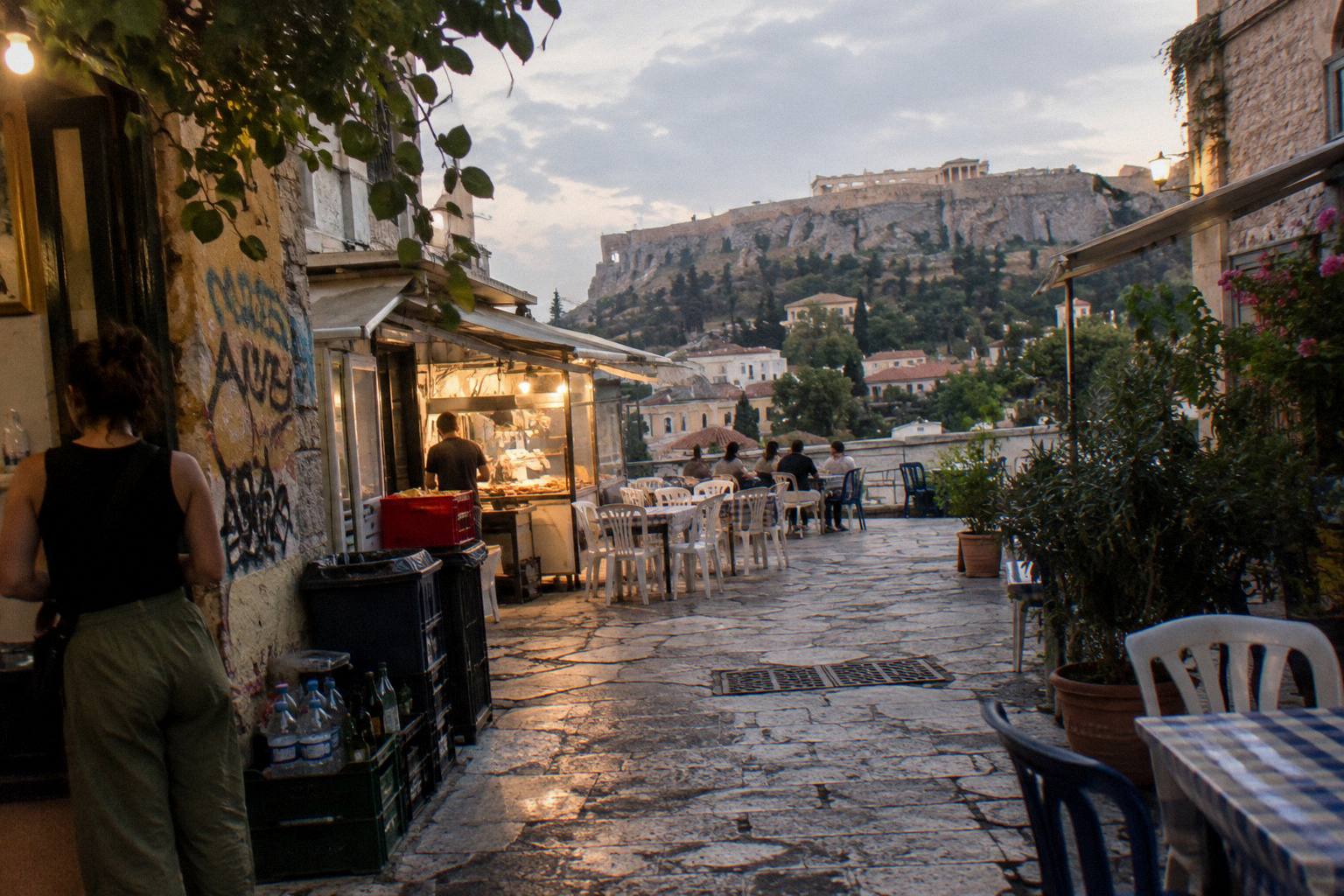
One practical note for the walk itself: the format you are learning about on a street food walk sits inside a much larger Greek food culture, and the what happens on a guided food walk guide walks through the pacing, stop count and group shape so the first one is not a surprise. Between them, the three souvlaki walks below cover every way to meet the dish in Athens: wrapped, made by hand, or earned at the end of a market morning.
Whichever card fits, check the live price for your date before committing; the from-prices above move with season and group size. If you are still weighing format against budget, the food walk prices guide compares the whole price spectrum across walk types.
Common Questions About Souvlaki And Gyro
Is Souvlaki The Same As Gyro?
No. Souvlaki is skewered meat cooked on an open grill; gyro is meat roasted on a vertical spit. Both can be served in pita with tzatziki, but the cooking method is entirely different.
What Is The Difference Between Souvlaki And Gyro?
The cooking method and serving. Souvlaki is skewered and grilled, also served de-skewered with pita and tzatziki; gyro is spit-roasted and commonly served in rolled pita with tzatziki and fries, per the visitgreece.gr cuisine page.
Which Food Walk In Athens Includes Souvlaki?
Three walks name it: the Athens Street Food Walk (souvlaki and peinirli), Make Your Own Souvlaki (you assemble one), and the Central Market walk, which finishes with a souvlaki in pork, chicken or vegetarian.
Does A Food Walk Include Gyro?
None of the three souvlaki walks names gyro in its inclusions. If the spit-roasted version matters to you, ask the operator whether the day's route includes a gyro stop.
How Much Does A Souvlaki Food Walk Cost?
From €59 per person for the 3 hour Athens Street Food Walk, €69 for the market walk and €84 for the hands-on souvlaki making walk. Prices vary by date and group; the operator's live booking calendar shows the price for your date.
Can You Cancel A Souvlaki Walk?
Yes. All three walks carry free cancellation up to 24 hours before the start time shown on the booking calendar.